

-
![24 Contact High-Density Crimp Inserts]() 24 Contact High-Density Crimp InsertsThe HDD-024-MC/FC is a 24-contact high-density crimp insert designed for industrial applications where multiple circuits need to be connected in a compact space. With 24 contacts plus PE, a ratedread more
24 Contact High-Density Crimp InsertsThe HDD-024-MC/FC is a 24-contact high-density crimp insert designed for industrial applications where multiple circuits need to be connected in a compact space. With 24 contacts plus PE, a ratedread more -
![128-Position Ultra-High Density Crimp Inserts]() 128-Position Ultra-High Density Crimp InsertsHD-128-MC/FC are 128-position ultra-high-density crimp inserts designed for industrial applications with complex wiring requirements. With 128 contacts integrated into a compact connection system,read more
128-Position Ultra-High Density Crimp InsertsHD-128-MC/FC are 128-position ultra-high-density crimp inserts designed for industrial applications with complex wiring requirements. With 128 contacts integrated into a compact connection system,read more -
![80Pos High Density 10A Crimp Inserts]() 80Pos High Density 10A Crimp InsertsThe 80-position high-density inserts are designed for industrial equipment that requires a large number of circuits in a compact connection space. With an 80-contact configuration and a 10A rating,read more
80Pos High Density 10A Crimp InsertsThe 80-position high-density inserts are designed for industrial equipment that requires a large number of circuits in a compact connection space. With an 80-contact configuration and a 10A rating,read more -
![64Pins Crimping Terminal 10A Connectors]() 64Pins Crimping Terminal 10A ConnectorsHD-064-MC/FC are 64-contact high-density crimp inserts designed for compact industrial connection systems. Rated at 10A and 250V, they are compatible with 24B hoods and housings and support crimpread more
64Pins Crimping Terminal 10A ConnectorsHD-064-MC/FC are 64-contact high-density crimp inserts designed for compact industrial connection systems. Rated at 10A and 250V, they are compatible with 24B hoods and housings and support crimpread more -
![50pos High Density 10A Crimping Inserts]() 50pos High Density 10A Crimping InsertsHD-050-MC/FC are 50-contact ultra-high-density crimp inserts designed for industrial applications requiring multiple circuits in a compact space. Rated at 10A and 250V, they support 0.14–2.5 mm²read more
50pos High Density 10A Crimping InsertsHD-050-MC/FC are 50-contact ultra-high-density crimp inserts designed for industrial applications requiring multiple circuits in a compact space. Rated at 10A and 250V, they support 0.14–2.5 mm²read more -
![40pins Heavy Duty Connector 10A 09210403001]() 40pins Heavy Duty Connector 10A 09210403001The HD-040-MC and HD-040-FC are 40-pin high-density ferrules from the Haoke HD series, one male and one female, designed for use with 16A housings. They are rated for 10A current and 250V voltage,read more
40pins Heavy Duty Connector 10A 09210403001The HD-040-MC and HD-040-FC are 40-pin high-density ferrules from the Haoke HD series, one male and one female, designed for use with 16A housings. They are rated for 10A current and 250V voltage,read more -
![25pos Crimping 10A Ultra-high Density Inserts]() 25pos Crimping 10A Ultra-high Density InsertsHD-025-MC/FC are 25-contact high-density crimp inserts designed for industrial applications where multiple circuits need to be connected in a compact space. Rated at 10A and 250V, they use PCread more
25pos Crimping 10A Ultra-high Density InsertsHD-025-MC/FC are 25-contact high-density crimp inserts designed for industrial applications where multiple circuits need to be connected in a compact space. Rated at 10A and 250V, they use PCread more -
![Crimping Terminal 15pin Insert 09210153001]() Crimping Terminal 15pin Insert 09210153001The HD-015-MC and HD-015-FC are male and female 15-position crimp inserts designed for compact industrial connection systems. With a 10A rated current and 250V rated voltage, they provide a practicalread more
Crimping Terminal 15pin Insert 09210153001The HD-015-MC and HD-015-FC are male and female 15-position crimp inserts designed for compact industrial connection systems. With a 10A rated current and 250V rated voltage, they provide a practicalread more -
![Crimping 8pos 10A Ultra-high Density Insert]() Crimping 8pos 10A Ultra-high Density InsertThe 8-position male and female crimp inserts are designed for compact industrial connection systems where installation space is limited. With an 8-position configuration and 10A rated current, theyread more
Crimping 8pos 10A Ultra-high Density InsertThe 8-position male and female crimp inserts are designed for compact industrial connection systems where installation space is limited. With an 8-position configuration and 10A rated current, theyread more -
![7pin High Density 10A Inserts]() 7pin High Density 10A InsertsThe HD-007-MC and HD-007-FC are compact 7-contact crimp inserts designed for 3A heavy-duty connector housings. The MC and FC versions form the male and female mating pair, with 7 contacts plus PE,read more
7pin High Density 10A InsertsThe HD-007-MC and HD-007-FC are compact 7-contact crimp inserts designed for 3A heavy-duty connector housings. The MC and FC versions form the male and female mating pair, with 7 contacts plus PE,read more -
![64 Pin High Density Crimping Heavy Duty Connector]() 64 Pin High Density Crimping Heavy Duty ConnectorThe HEEE-064-MC and HEEE-064-FC are high-density crimp inserts designed for 24B heavy-duty connector systems. With 64 contacts + PE and a rated capacity of 16A / 500V, they are a good fit forread more
64 Pin High Density Crimping Heavy Duty ConnectorThe HEEE-064-MC and HEEE-064-FC are high-density crimp inserts designed for 24B heavy-duty connector systems. With 64 contacts + PE and a rated capacity of 16A / 500V, they are a good fit forread more -
![40pin Crimping Terminal 16A Heavy Duty Connector]() 40pin Crimping Terminal 16A Heavy Duty ConnectorThe HEEE-040-MC and HEEE-040-FC are 40-contact crimp inserts designed for compact, high-density industrial connections. The MC and FC versions work as a male and female mating pair, making themread more
40pin Crimping Terminal 16A Heavy Duty ConnectorThe HEEE-040-MC and HEEE-040-FC are 40-contact crimp inserts designed for compact, high-density industrial connections. The MC and FC versions work as a male and female mating pair, making themread more


Why Choose Us?
Quality products
2018 introduced into automated production, Obtained IS09001 management system certification, the product meets the Rohs 3.0standard.
Rich experience
Established in 2012 our company focusing on the development and manufacture of heavy-duty connectors.
Reliable service
HAOKE's goal is to provide uniformly good services and to drive these forward through a passion for innovation, internationalisation and future-oriented thinking.
Surpassing innovation
Haoke was formally established, focusing on the development and manufacture of heavy-duty connectors. Haoke had obtained CQC, CE, UL, CUL, ROHS and other certifications and obtained further recognition.
Heavy duty connector, also known as HDC heavy duty connector, aviation plug. Compared to traditional wiring methods, the use of heavy duty connectors reduces field wiring after equipment or vehicles leave the production floor, increases productivity, and reduces the quality risk of field wiring.
● Robustness: Designed to deliverreliable performance under themost demanding operating andenvironmental conditions.
● Maximum flexibility: Multiple optionsto meet applications more accurately.
● Design freedom: Flexible designs socustomers can choose/create a dlyinterface for their equipment.
● Sustainability: The industry-standardized interface and globalfootprint help to reduce customerssupply chain risks.
Heavy Duty Connectors Protect the Flow of Power and Data in Robots in Harsh Environments
The definition of "harsh" varies significantly across the many operating environments that require automated processes. Some robots may be working in a highly controlled clean room or surgical suite, while others operate on a grimy, dusty, or contaminated factory floor. In both instances, they will face aggressive cleaning or sterilization agents, vibrations, extreme temperatures, welding sparks, gaseous environments, or electromagnetic interference.
For a robot to perform within its specified parameters, the controllers need accurate, real-time information on its position. If the position data flow is interrupted, the computer cannot accurately measure the position of the robot. Its assumptions may be inaccurate, and it may issue commands that lead to overreaching or overcompensating movements. Rugged interconnects that can protect the flow of power and data even under less-than-ideal conditions are essential to safe and reliable robot operation, and overall productivity.
Sensitive robotics and automated systems used in industrial environments face several types of challenges. High temperatures, for example, can gradually degrade component materials, which increases the potential for interruptions to the flow of power and data. Yet concentrated high temperatures are common in many environments where robotics are used. Injection molding machines, commonly experience temperatures up to 220° C.
The compatibility of electronic components with various cleansing agents and procedures should be considered when designing systems. Cleaning agents are frequently present in production or processing areas, usually under high pressure and temperature. These chemicals can be extremely harsh and corrosive to sensitive electronics. They are also application-specific.
Heavy-duty connectors (HDC) can help engineers meet both the requirements and the challenges of building robots for harsh industrial environments. Built in a rugged housing and designed to transmit power, data, and signal, HDCs help guarantee safe, reliable, and productive operation of robots in the toughest conditions. Modular HDCs are an ideal complement to hybrid cable systems, as they provide the ability to create a component that matches the exact needs of a unique or flexible design.
A wide array of connectors are used in industrial applications to take the electrical power, sensor signals, and control data on cables through their junctions out of and into automation components. What constitutes a heavy-duty connector (sometimes abbreviated HDC in connector product names) depends on the application. So is somewhat relative. That said, there's a distinct difference between ruggedized industrial connectors and those light-duty RJ and IEC connectors found in clean indoor automation applications involving basic Ethernet and light power.
Heavy-duty connectors can feature greater overall robustness as well as enhanced ingress protection, reduced flammability, wide operating temperature, interlocks, earth shielding, or simply more reliable connection with positive locking.
The way cable glands anchor cables prevents damage to electrical contacts should the cable be tugged or otherwise disturbed. Cable glands also prevent the sheaths of cables from rubbing against the sharp rims of holes through the enclosure as the gland bodies fill and flare out around these edges. Without cable glands, cables subject to even the slightest movement could be quickly sliced by the sharp edges of enclosure holes until their outer insulation is completely sawn through and the cable cores short out.
In contrast with these cable glands (that encircle cables), are connectors that terminate cables — and generally allow for more convenient disconnection and reconnection as well as joining of multiple component and cable sections. Typically, heavy-duty variations of these connectors include one or more ruggedizing features.
Heavy-duty cable connectors can feature cable-entry protection in the form of a universal cable gland, cable clamp, or seal and anti-twist device. No matter the mechanical form, these secure the cable and prevent it from pulling out of terminals. Cable-entry protection can also prevent cable wear just as standalone cable glands do. Note that lamellar inserts (glands with multiple fingers) are common on moderately ruggedized connectors, though the inserts require regular retightening to ensure ingress protection. Glands with a continuous seal that clamps around the cable are often a more reliable choice for heavy-duty applications.
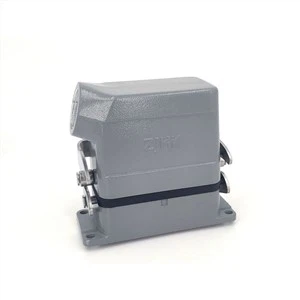
The hood on some heavy-duty cable connectors encloses the electrical conductors of the plug while providing insulation and ingress protection — as well as some locking or latching sleeve or lever to keep the connector halves together.
On many heavy-duty cable connectors, the male insert includes male pins as well as screws or crimp terminals where the conducting wire cores contact the pins. In such connectors, the female insert includes complementary sockets as well as receptacles or crimp terminals where the conducting wire cores contact the sockets.
The Benefits of Using Heavy Duty Connectors in Industrial Applications
Durability and reliability: Heavy duty connectors are designed to withstand harsh environments, extreme temperatures, and high vibrations. They have a robust construction that can resist impacts, dust, moisture, and chemicals, ensuring reliable performance over long periods.
Ease of installation and maintenance: Heavy duty connectors are easy to install and maintain, thanks to their modular design and tool-free locking mechanisms. They allow for quick and easy replacement of damaged or worn out components, reducing downtime and maintenance costs.
Safety: Heavy duty connectors have safety features such as locking mechanisms, polarizing keys, and grounding contacts that ensure proper and secure connection, preventing accidental disconnections or short circuits. This makes them suitable for high voltage and high current applications that require strict safety standards.
Flexibility: Heavy duty connectors come in a variety of sizes, contact configurations, and housing options, allowing for customization and flexibility in terms of power and signal requirements. They can be used for both power and signal transmission, making them suitable for a wide range of industrial applications.
Cost-effective: Heavy duty connectors offer cost savings in the long run due to their durability and reliability. They reduce downtime and maintenance costs, and can also reduce the need for costly cable and wiring infrastructure.
Compatibility: Heavy duty connectors are compatible with different types of cables, wires, and devices, making them suitable for retrofitting existing systems or upgrading to new technologies.
Environmental protection: Heavy duty connectors have a high degree of protection against environmental factors such as dust, water, and chemicals. This makes them suitable for industrial applications that require protection against harsh environments.
How to Specify Heavy-Duty Connectors and Cable Assemblies for Harsh Industrial Applications
Designing and specifying cable assemblies for use in harsh environments presents a number of challenges. Industrial equipment can be subjected to harsh conditions, such as high temperatures, water, high humidity, particulate ingress, electromagnetic interference (EMI), vibration, and impact from close proximity to moving factory components. Over time, exposure to these conditions begins to impede assembly conductivity and can require the replacement of cabling or, worse, the expensive equipment.
Heavy-duty connectors (HDCs) are a good choice for harsh-environment industrial applications such as food and beverage or oil and gas processing. HDC systems provide almost unlimited connection options inside a heavy-duty industrial housing. These versatile housings are designed to industrial standards, ranging from IP to NEMA ratings, that quantify the degree to which an assembly can withstand harsh conditions. Housing material flexibility is another benefit to choosing an HDC assembly. For instance, the best housing material for reducing or eliminating the impact of a wet environment on a connector is plastic. Additionally, if there are shielding concerns, designers can select a housing with an integrated filter that can reduce or eliminate electromechanical interference (EMI) from surrounding equipment.
Once the protective housing type has been selected for the application, the housing size will be determined by a hybrid combination of pluggable inserts that are required to carry power, signal, or data to or from factory equipment. This is where HDC systems are uniquely positioned to meet the demands of the hybridization trend in pluggable cabling for industrial manufacturing, which is a result of increased consumer demand for customized products that require more flexible, decentralized manufacturing processes. This increased flexibility requires more functionality at device or factory equipment connection points rather than at a central control cabinet. As such, hybrid HDC solutions that offer a combination of power, data, and signal in one connector are in high demand.Modular HDC inserts provide an integrated hybrid assembly that creates new considerations for power and signal wiring beyond the fundamentals of approval ratings, wire gauge, and clamping type. Options for insert type can include, but are not limited to, RJ45, M12, USB, D-Sub, fiber optic, pneumatic (with or without a stop valve), high-density signal, and high-current power connections. Cable length has always been a factor for power transmission, but it can also determine the use of Ethernet-compatible cabling systems like Cat. 5, Cat. 6, or for very long cables, fiber optics. With the use of diverse contact types, it is also important to consider the assembly build process.
Ingress protection (IP) ratings are another key concern for hybrid assemblies in harsh-environment applications. In hybrid systems, cables that provide air, signals, power, or data are threaded through a single cable gland. Multiple cables fed through one circular gland can leave a gap at the gland entry point and this gap can allow dust or moisture to enter the housing and make it challenging to maintain the hybrid assembly's IP rating, but there are several available solutions. One solution is to submit every assembly to an environmental test prior to use in order to ensure that its IP rating is maintained. This testing should be conducted in addition to the typical testing performed on the data, signal, and power connections.
The available options for maintaining ingress protection via a single cable entry point into a protected housing include the use of cable gland grommets or conduit. A grommet or insert fitted inside a cable gland will seal the opening around each individual cable to maintain the assembly's IP rating. However, it is important to note that options may be limited based on the number of cables and the size of the housing opening. If cable gland grommets are not an option, many types of plastic or metal conduit can be attached to an HDC cable gland via an adapter. When cables are run through conduit, it is important to adhere to the National Electrical Code (NEC) maximum fill percentages for the application to prevent overfilling the conduit.

Here are some of the features of the heavy duty connector:
● The width is narrower, the volume is compact, and the occupied space is small.
● Quick-lock, save time and convenience.
● Equipped with code pin, from a variety of coding functions.
● Equipped with a mounting plate to pre-fix the module.
● With grounding function.
● The grounding screw is in the vertical direction and does not interfere with the panel operation space.
● Match a variety of single module ferrules.
● EMC function.
The heavy duty connector and component market is experiencing steady growth and is expected to continue this trend in the coming years. The market is driven by factors such as increasing demand for reliable and durable connectors in industries such as manufacturing, automation, automotive, and transportation. The growing need for efficient machinery and equipment in various sectors is also contributing to the market growth.
One of the key trends in the heavy duty connector and component market is the increasing adoption of industrial automation technologies. The use of heavy-duty connectors enables seamless connectivity and communication between different components of automated machinery, thereby improving productivity and efficiency. The rising trend of industry and the internet of things is further fueling the demand for high-performance connectors in industrial applications.
There are several growth opportunities for companies operating in the heavy duty connector and component market. The increasing investments in infrastructure development projects across the globe are expected to create a higher demand for heavy-duty connectors in construction and related industries. The growing focus on renewable energy sources is driving the need for robust connectors and components in the energy sector.
The heavy duty connector and component market is poised for expansion, thanks to the increasing demand for reliable and durable connectors in various industries.
The heavy duty connector and component market is experiencing steady growth and is expected to continue this trend in the coming years. The market is driven by factors such as increasing demand for reliable and durable connectors in industries such as manufacturing, automation, automotive, and transportation. The growing need for efficient machinery and equipment in various sectors is also contributing to the market growth.
One of the key trends in the heavy duty connector and component market is the increasing adoption of industrial automation technologies. The use of heavy-duty connectors enables seamless connectivity and communication between different components of automated machinery, thereby improving productivity and efficiency. The rising trend of industry and the internet of things is further fueling the demand for high-performance connectors in industrial applications.
The heavy duty connector and component market is poised for expansion, thanks to the increasing demand for reliable and durable connectors in various industries. Companies in this market can capitalize on the growth opportunities by focusing on product innovation, expanding their product portfolios, and exploring new market segments to sustain their competitive edge.
Requirements for HDCs: Robustness, Stability, and Flexibility
HDCs have outstanding and reliable performance in harsh environments. They are mainly used for the data, signal, or electrical connection between different equipment and functional units. Apart from enabling extremely convenient installation and maintenance for complex control equipment, their modular and standard interface design can maximize application efficiency.
With the rise of Industry 4.0, the demand for customization, stability, and integration of equipment increases in industry production
HDCs consist of three key elements: inserts, contacts and hoods, and housings. The inserts and the contacts together form an electrical module for equipment electrical connection. The housing is made of either metal or thermoplastic with a robust structure to provide reliable mechanical and environmental protection for electrical connection. The water and corrosion resistance of the metal housing ensures that HDCs can work in any harsh environments and fulfill the outdoor connection demand of customers. Also offers a complete product range with current from 5A to 350A. The module range makes connection with custom interfaces a reality.
There are different kinds of connectors for different applications and different environments. As all these applications require electrical and signal connection in environments challenged by temperature, humidity, and long-term vibration that leads to connection loosening, HDCs are designed for use in harsh and complex environments to ensure the stable operation of the entire system.
Our Factory
Haoke Electric Co., Ltd. was formally established, focusing on the development and manufacture of heavy-duty connectors. And soon thereafter, the HAOKE® connector made its convincing market debut and went on to set a globally recognised standard. He has remained the backbone of the Technology Group during all its changes.


Our Certificate


FAQ
We're well-known as one of the leading heavy duty connector manufacturers and suppliers in China. Our factory offers the best heavy duty connector made in China with competitive price. Welcome to place an order.