

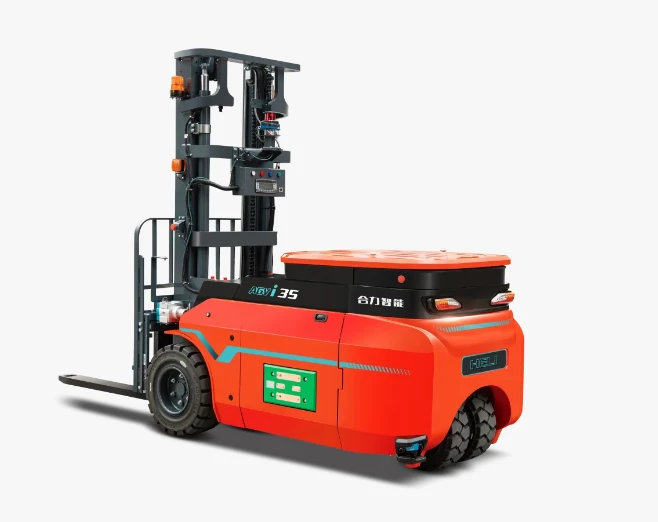
AGV Charging Systems
As warehouses become more automated, AGVs and AMRs are taking on more tasks such as transporting materials, moving pallets and handling goods between different workstations.This puts more attention on the electrical connections used for power, control and communication.A connector may look like a small part of the system, but a poor connection can interrupt the operation of an entire vehicle. For AGV charging systems, the connector needs to handle repeated connection and disconnection while maintaining stable electrical contact. In addition, the equipment may operate in environments with dust, vibration and frequent mechanical movement. These conditions make connector selection an important part of the overall system design.
Why Is AGV Charging Different?
AGVs do not usually stay in one place for the whole working cycle. They move continuously between storage areas, production lines and charging stations. When the battery level drops, the vehicle needs to return to a charging point and establish an electrical connection before it can continue working.
This creates a different requirement from a connector used in a fixed control cabinet. The charging connector may be mated many times during its service life, and the vehicle may not stop at exactly the same position every time.
 "info-1-1")
Power and Signal Connections in One System
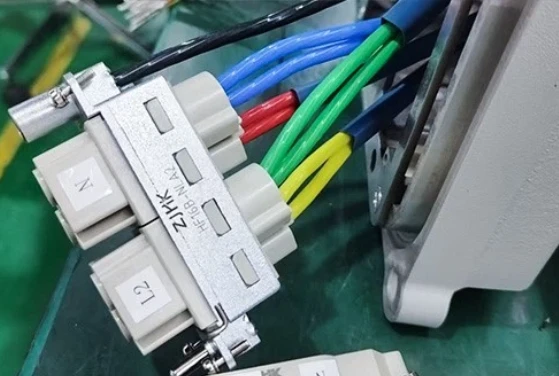
An AGV does more than receive power from a charging station.
The vehicle also needs sensors, battery management, control systems and communication functions to coordinate its operation. This means that the electrical system may contain different types of circuits within a relatively small installation space.
A well-designed connector system can help organize these connections and simplify wiring. High-density inserts are particularly useful when many control or signal circuits need to be connected without adding multiple separate connectors.
Protection Matters in Warehouse Environments
A warehouse may appear to be a clean indoor environment, but automated vehicles are exposed to continuous movement, vibration, dust and occasional impacts during daily operation.
The connector housing therefore needs to provide suitable mechanical protection and help prevent contamination from affecting the electrical connection. For heavy-duty rectangular connectors, protection levels such as IP65, IP67 and IP68 are commonly available depending on the connector design and application requirements.
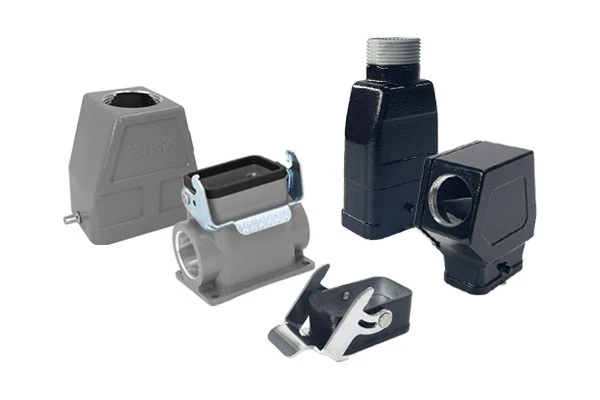
Where Heavy-Duty Connectors Fit in an AGV System
Heavy-duty connectors can be used in different parts of an automated vehicle depending on the electrical architecture.
Charging systems
connecting the vehicle to its charging station
Control systems
linking controllers and electrical equipment
Battery systems
connecting power and battery-related circuits
Motor and drive systems
transmitting power to drive equipment
ZJHK Heavy-Duty Connector Solutions
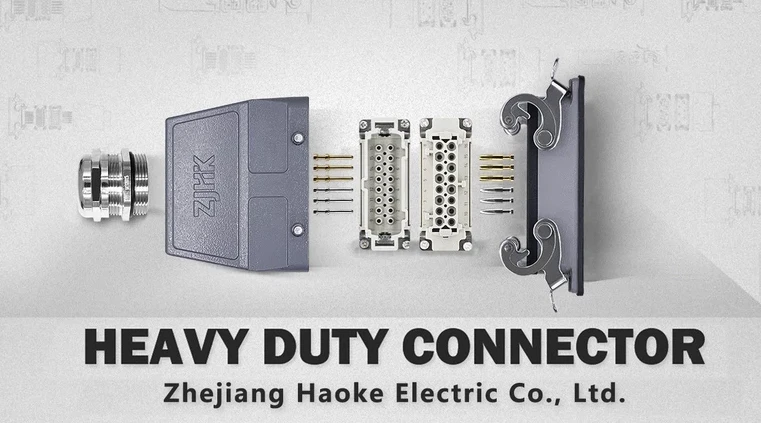
We focus on heavy-duty rectangular connectors for industrial applications. Our product range covers different housing sizes, contact configurations and termination methods, allowing customers to select suitable solutions according to their equipment and wiring requirements.
For automated warehouse equipment, high-density inserts can help manage multiple control and signal circuits, while protective metal housings provide mechanical protection for connections in industrial environments. Our technical team can also provide product drawings and support customers in selecting suitable connector combinations for different equipment designs.
From automated vehicles and charging systems to industrial machinery and control equipment, the right connector is not simply a connection point. It is part of the system that helps keep power, control and signal circuits organized and working together.

01
High Quality
02
Advanced Equipment
03
Professional Team
04
Custom Service